
Data Centers in Space Sounds Like a Good Idea, but it will Cost Trillions
The Reality of Moving our Data to LEO

I live in a region with the highest concentration of data centers in the country. The Commonwealth of Virginia is home to 557 data centers, the preponderance of which are in Northern Virginia. I live across the river from DC, but if I drive west on Route 66 for about an hour, I will enter Loudon County. There, you’ll find Ashburn, VA. Of the 557 data centers in Virginia, 153 (or 27%) are in Ashburn. Combine that with 90 more in Manassas, VA and that’s 43% of all data centers in the Commonwealth in two Northern Virginia municipalities.
Last year, I found myself at a meeting of county officials in Fairfax County, home to neither Manassas nor Ashburn. Before going to the meeting, I was advised not to use the term “data center” in the meeting. This was curious because Fairfax is adjacent to some of the highest concentrations of data centers in the country. I heeded the advice and I did not utter the “d word” in the meeting, but this reveals something interesting.
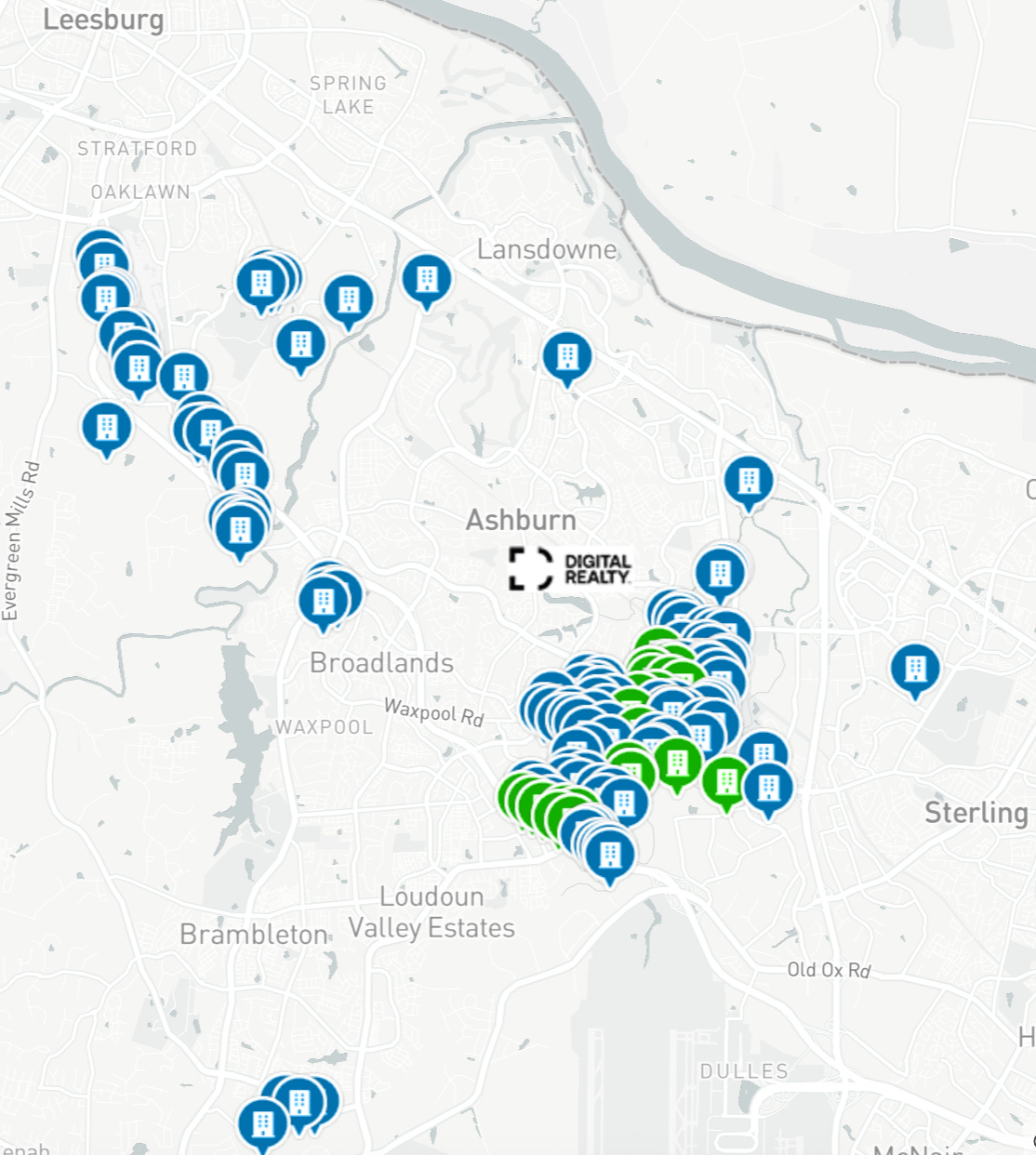
Data Centers Around Ashburn, VA
Today, the mere suggestion of more data centers in Northern Virginia dare not be spoken aloud, but there was clearly a time when data centers were viewed as an exceptionally good idea. It’s not hard to see the evidence with your eyes. Curiouser, this was at a moment when the AI infrastructure build is getting funding, and the Trump Administration was calling for the Genesis Mission. It would seem that Northern VA would be in prime position to take advantage of this funding and possibly prosper from the boom.
As the country and the AI industry push for more AI infrastructure, there are communities that are pushing back against the idea of data centers in their backyards, but there are a few companies that think they have the answer: data centers in space.
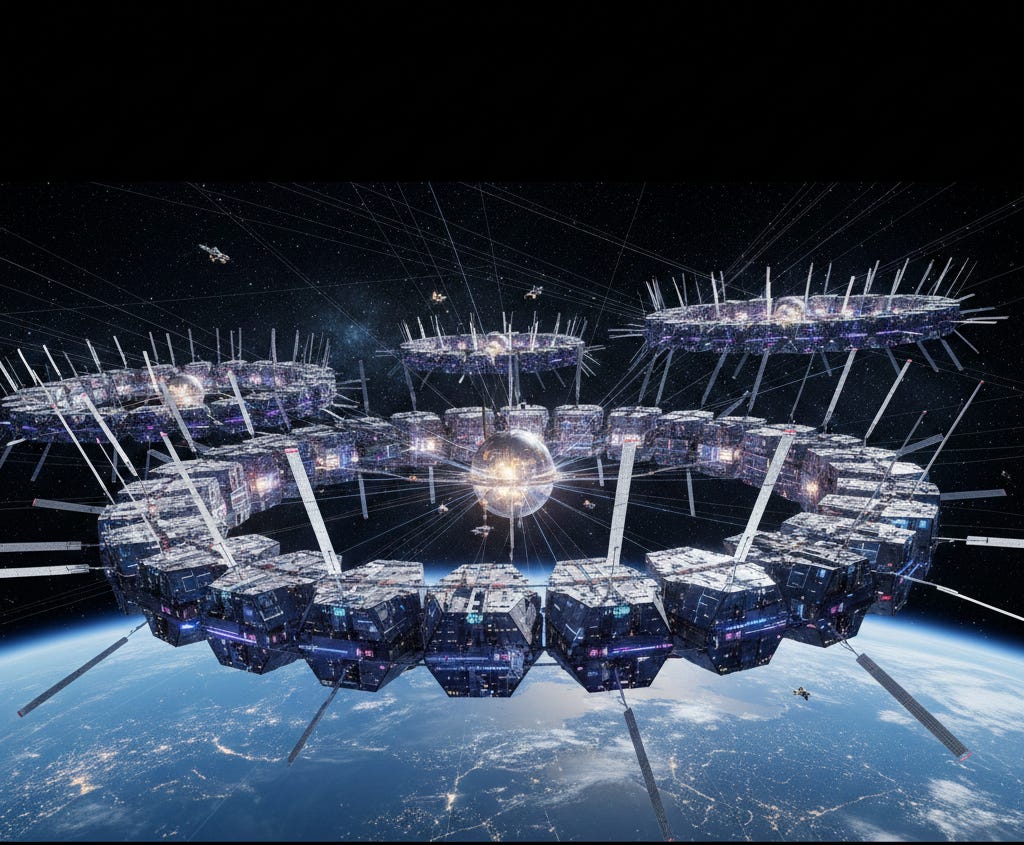
As of last year, a few companies including SpaceX, Google’s Project Suncatcher, Lone Star Data Holdings, and StarCloud are prototyping orbital compute. The desire to push data centers into space is understandable:
24/7 high density solar power
Space as a heat sink reducing/eliminating cooling costs
In situ data for orbital compute
Political and regulatory freedom
On the heels of the SpaceX-xAI merger, talk of data centers in space is gaining momentum. Many look at the availability of power and elimination of cooling as the next step in data centers, but there’s a reality to consider. Even as we draw down launch costs, the costs to get just the server racks into space is in the trillions of dollars.
This leave a question. Is the data center in space idea just about continuing the inflated demand for space launch services?
Many people in the communities pushing back against data centers on Earth would likewise be happy to have their problem blasted into space, but there are some real catches. Orbital data centers sound like a perfect idea, but there are drawbacks. Building data centers in the open fields of Loudon County was once viewed as a great idea, but today many are questioning those decisions. Building orbital data centers will come with lessons learned but we don’t need the benefit of hindsight to see them. Let’s talk weight.
…With a T
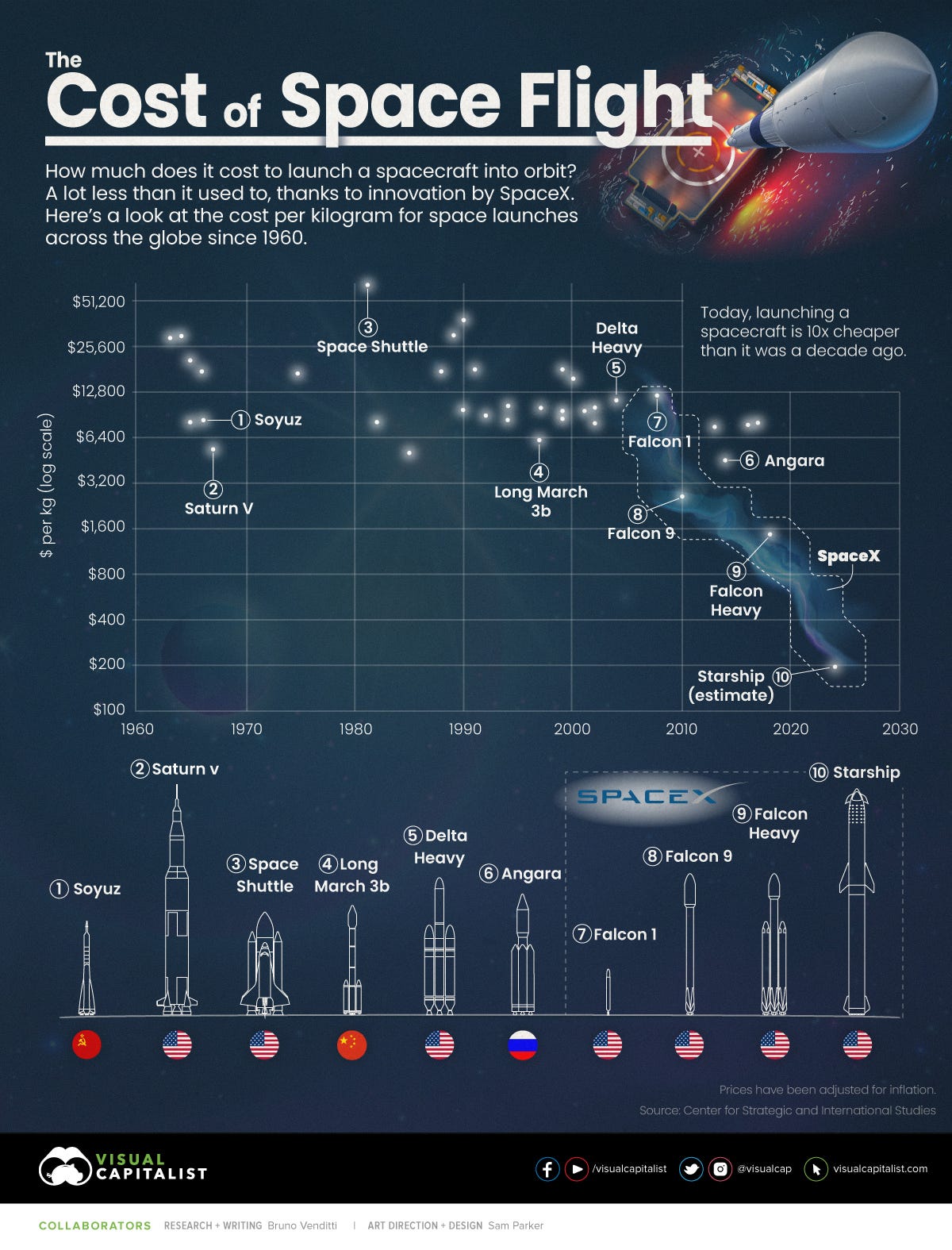
Our individual data bits are carried on electricity. The mass of an electron is 9.109 × 10^-31 kilograms, which is awfully small. Those electrons operate billions of transistors on semiconductor chips, which can weigh around 20 milligrams, also small. But as we start to scale up to data center sizes, the weights we are dealing with get huge. This matters because if we are going to build a data center in low earth orbit (LEO) we must launch it there. Launch of materials into space is not free and is calculated by kilogram. Launch cost per kilogram has varied from over $50,000 per kilogram to around $1,500 today. The introduction of reusable launch rocket bodies by SpaceX resulted in a significant drop in cost compared to the era of the space shuttle, when costs peaked. The vision is to get launch cost per kilogram down to around $20, but that has not occurred yet. In order for this drop to happen, the space industry will need to begin launch far more materials into space to achieve economies of scale and to incentivize the next round of innovation necessary. Launching large quantities of Starlink satellites will not be enough.
Building a data center in space means launching all the hardware required to build that data center…into space. We can subtract the costs for things like cooling systems as we will assume that the data center will be able to radiate its heat into space. We can also subtract traditional generators and backup generators, which will be replaced with solar arrays and will be much lighter. For this exercise, we are going to calculate ONLY what it would cost to launch the required servers and racks into space to create an orbital data center at the hyperscale level.
The weight of server racks can vary but is roughly 2,000-3,000lbs per rack. We will average it to 2,500lbs. In a modern hyperscale data center there are roughly 2,500-5,000 server racks, let’s use 3,000. At $1,500 per kilogram to launch any material to LEO, the costs break down this way:
Single Server Rack: 2,500lbs (1,134kg) = $1.7 million
Total Hyperscale Data Center Servers: 3,000 server racks at 2,500lbs each = 7.5 million pounds (3,402 metric tons or 3,402,000,000 kilograms) = $5.1 trillion
This is just to launch the required server racks into space and speaks nothing to the solar panels, batteries, structure, comms equipment, and other items that would be required.
There is an argument that once launch cost per kilogram comes down to around $20 per kilogram, orbital data centers become much more feasible. Even at $20 per kilogram, the costs for only the servers and only at the hyperscale level works out to:
3,402,000,000 kilograms X $20 per kilogram = $68.1 billion
That’s much better than $5 trillion, but still an incredible cost that does not include the entire expense. Think about it. You are trying to launch most of this into space:
Maintenance and Troubleshooting
Just getting the hardware into orbit is one thing, but there’s much more to consider. Assembling the data center in orbit…at 17,000 miles per hour…will be a challenge all on its own. Assuming all the materials get launched into space and it gets assembled and brought online with good communications back to Earth, there will be more to worry about.
Issues in data centers on Earth are hardly uncommon. Last year, AWS and Microsoft had major outages of their services in consecutive weeks. These two companies own 51% of the global cloud market, said another way, data centers. There were problems with data centers and the cloud services they enable throughout 2025, with the two in October 2025 gaining the most news. Issues with the performance of data centers and cloud infrastructure will not end if we park the hardware in space. Sure, we won’t have to look at it, but the problems won’t end. In the understatement of the year, maintenance and response to emergencies is harder in space.
Yes, there’s free cooling and unlimited solar energy, but response and recovery get considerably harder. Data centers and cloud products will need to get much more resilient than they are today for a data center in space to make sense. In 2025, the inherent complexity of the cloud architecture caused two major outages with billions of dollars in losses. How moving the data center to space improves these issues is not clear.
Satellites must be built with technology that the builders project because it takes so long to go from design to orbit. Once on orbit, the satellite must be reliable and controllable to avoid outages, collisions with other satellites, and the potential for cybersecurity issues. They also require shielding and physical hardening against the harshness of space, all this costs money to design, build, and launch.
Just Put it in Space
Humans have a fascinating relationship with space. So much of our cultures, religions, and scientific inspiration comes from it. Once we figured out how to get there, we created a new wave. That wave has ebbed over the decades, but we still love space. An odd factor in our love is that we often view it as a place to banish things we don’t like. For example, there has been talk for decades about launching our nuclear waste into space, ignoring that strapping nuclear material to a rocket is how one might define a dirty bomb. We’ve been leaving our garbage up there for decades as old rocket bodies still orbit our planet and defunct satellites slowly decay.
Don’t want to stop polluting our planet? No worries. We’ll just move all of humanity off a planet where food literally grows on trees to a desolate planet where opening a window will kill you.
It’s a curious place that space occupies in our minds. So much wonder but also a place we are happy to junk up. Moving data centers into LEO is not only expensive but it could also be dangerous. As LEO continues to get filled with more satellites from what is turning out to be more of a LEO economy than a “space economy” the risk of collision from debris raises to near certainty. Without some kind of control on how and what we throw into space, putting trillion (or even billion) dollar assets in orbit presents a significant risk to investors and customers. Even if we get launch costs down to $20 and let’s assume we can get the whole thing done for around $100 billion. The risks from everything from cyberattacks to physical damage from the orbital environment are likely to eclipse the tolerance of investors. It’s certainly fun to think about and Project Suncatcher is a cool name, but the reality of building something like this is decades away at very best.
If moving data centers to space is a goal, we need to create the enablers in the form of orbital debris clean up capabilities and international agreements regarding what can be launched into space and how. It’s not regulation for regulation’s sake, it’s the prerequisite for a future where data centers are moved off world.