
Raw Materials Rethought: Sodium Ion Batteries
Cost Reduction and Geopolitical Advantage When We Need it Most


At the police checkpoint, I flashed my American diplomatic passport. The officer at the barricade looked over my document and handed it back to me quickly. He waved the car through with his eyes already fixed on the car behind us. My driver deftly negotiated the combination of traffic cones and jersey barriers as the road angled sharply down. In the days before smart watches, I had a Suunto Core watch that I used on hiking trips and on travel. I watched the altimeter fall into the negatives, past -10, past -100. This was the road to the Dead Sea.
For the first time in memory, I was on a foreign work trip and had a free weekend. At the reception desk of my hotel, I asked the attendant if I could hire a driver for the weekend. As luck would have it, her cousin was just such a driver and would give me a deal.
Saturday morning: The Dead Sea and the Baptism site of Jesus Christ
Sunday morning: Wadi Rum
I was thrilled about my upcoming trip, so the hours of the week ticked by slowly in the extreme, but dry, heat. Each day after work, I would change clothes in my hotel and do my best Frogger impression across one of the main roads in Amman, Jordan where there stood a shawarma stand that I still think about today. They spoke no English and my Arabic was barely enough to order food, but we made it work. I’ve often considered returning just for the shawarmas.
Back on the road, my driver pulled over next to a public section of beach along the shore of the Dead Sea. Even though we drove sharply down to get here, there was still a long walk further downhill to get to the sea. My altimeter continued to drop. To get the full experience, I felt that I should get in the water. Once there, I had no choice but to float. The viscus water held up my frame with ease as I looked around at others doing the same. Feeling that I needed to get the FULL experience, I made a decision I regret to this day.
There is no regret like that which is accompanied by pain.
Fighting the viscus water, I dunked my head quickly below. Even though I did not open my eyes, the pain I felt was instant. The water, known to be over 8 times saltier than the ocean, immediately began to burn. It took what felt like minutes for me to even be able to tolerate opening my eyes enough to stagger to the shore. Once on shore, small crystalline salt deposits left over from lapping waves cracked beneath my clumsy feet. I found my way to a shower and rinsed off. Even after the rinse, I could feel the salt on my skin and in my hair. Back at my hotel, I showered again and still could not get fully clear of the salt.
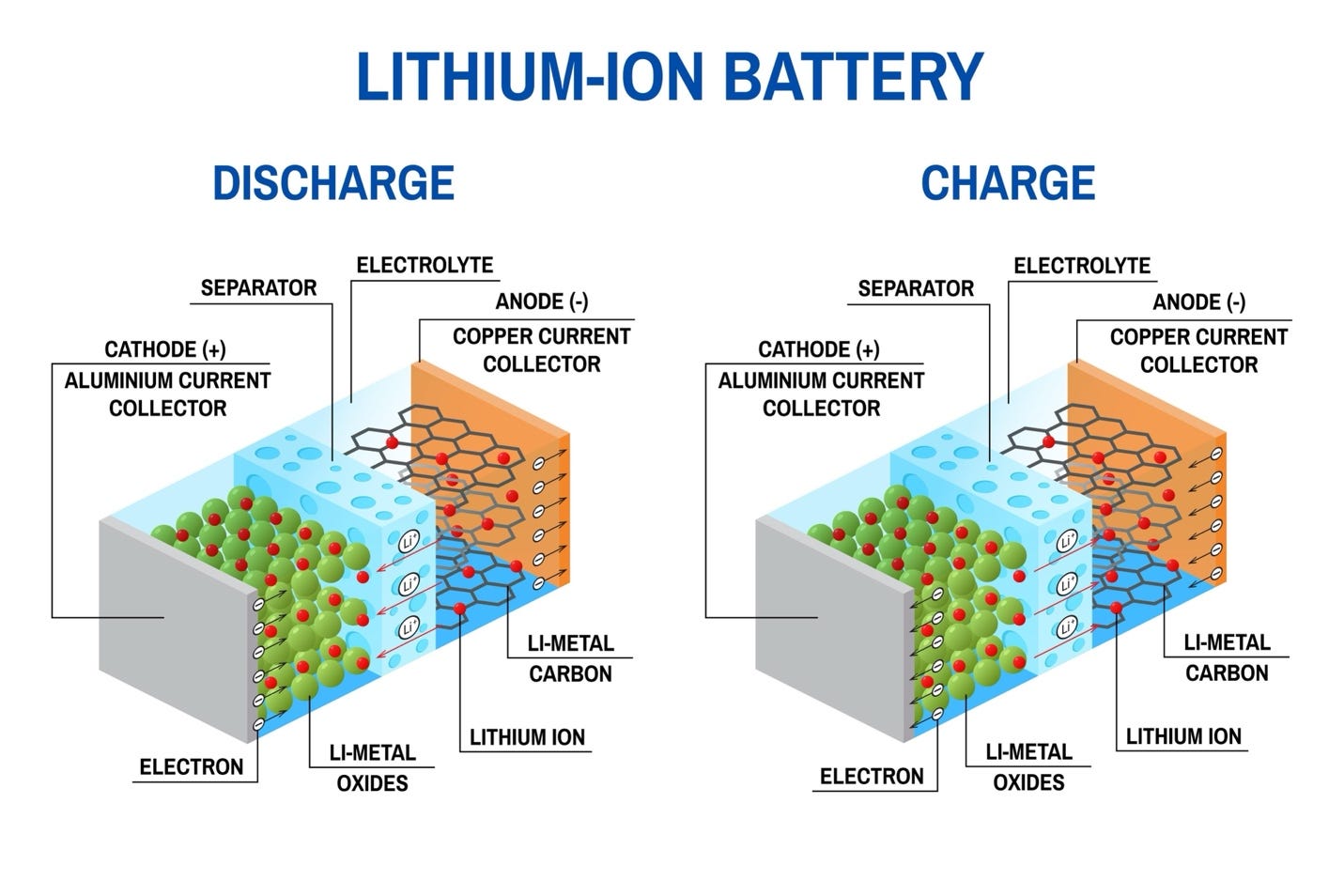
This amusing story that my wife still laughs at is easily my closest and most intense encounter with salt. But if some major companies like GM have their way, many of us might have a much closer relationship to sodium. GM is just one company looking at the scaling of sodium ion batteries as a potential solution to not just energy challenges, but supply chain problems. Before diving into the benefits to our energy supply chain, we are going to take a moment to review what a sodium ion battery is, how it works, and its advantages relative to our better-known lithium-ion batteries. Energy storage is a key prerequisite for a move toward green energy technology and has been trouble across technologies from smart phones to electric cars to solar energy generation.
Keep reading with a 7-day free trial
Subscribe to The Binary Breakaway to keep reading this post and get 7 days of free access to the full post archives.