
The Technology Behind Your Champagne Toast
Happy New Year!


I’m not really sure how I got my first bartending job.
I was in the navy and not making much money. When I was in high school, I worked at a local Holiday Inn at what passed for a nice restaurant in my small town. There was a Holiday Inn not far from my Virginia Beach apartment, so I applied. It seemed like a relatively safe, known, and a touch nostalgic way to supplement my low enlisted salary.
After working a few ballroom events, I got asked if I’d like to be a bartender in the main bar. I jumped at the chance and began working for a boss that was about two years older than me and effectively let me set my own schedule. Working at a hotel comes with an extra-large helping of stories and this one was no exception. I could go on about drunken weddings, room service, and calling our head of security (who was a former Navy Frogman) to break up a fist fight between a husband and wife. But I also worked a lot of holidays as is the norm in hospitality. Especially New Years.
One New Year’s Eve, I was working the U-shaped bar situated in a room of floor to ceiling windows at the Chesapeake Holiday Inn. I was hustling drinks and running to the kitchen for food while watching the drunks and hoping my tip jar filled. I was also serving a lot of champagne. A young couple at the corner of the bar ordered a bottle of mid-range champagne to celebrate the ringing in the of new year. I grabbed a bottle from my small cooler and removed the foil. I turned the twisted wire that held on the metal safety over cork and thew both in the garbage. I pressed lightly on the cork and all I heard was a loud bang.
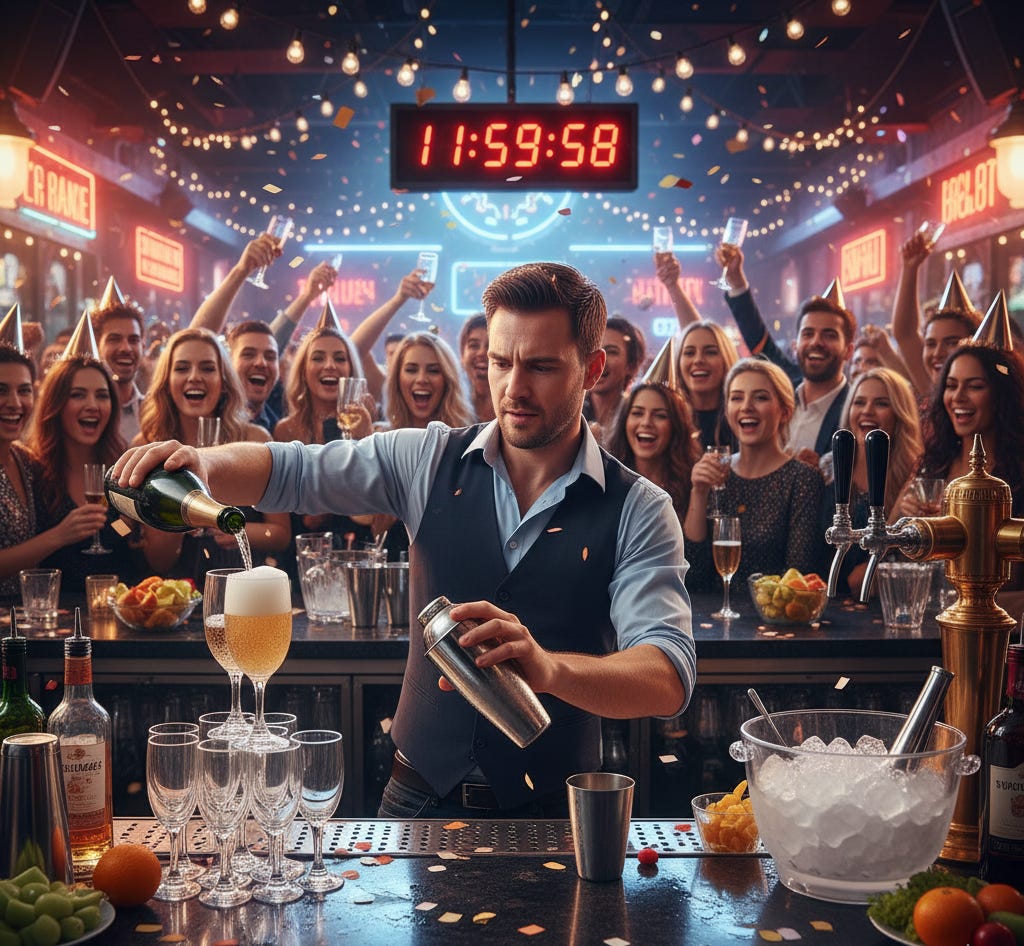
The cork was under so much pressure, it shot off at the slightest touch, whizzed past the ear of a patron and slammed against the windows behind him. All of us stood and stared at each other. This symbol of luxury and celebration the world over on the very night it is supposed to be consumed the most could have taken the eye of a bar patron had I stood at a slightly different angle. We all laughed and took home a story to tell one day in an emerging technology article.
Tomorrow is New Year’s Eve when people around the world will be popping corks and drinking wine with bubbles of just the perfect size. As we prepare for the complement to our celebration of the year that was and the welcoming of the year that will be, the Binary Breakaway is taking a moment to celebrate the technology that makes champagne possible. Let’s raise a glass but before we cue Auld Lang Syne, let’s talk thick glass.
Contents Under Pressure
So entwined in our celebratory culture is champagne that it is the combination of the sight, taste, feel, and SOUND of a single bottle of champagne that conveys celebration. Especially the sound. We all know the pop of a champagne bottle. That moment when the person opening it turns their face away and closes one eye while those around them take a form of modified cover in anticipation of that familiar pop. Cover is taken because of what nearly happened to my bar patron but at the same time, we all want to be there for the potentially dangerous popping of the cork and the possibility of spilling some quantity of the precious liquid on the floor. It is important to recall that the feature we associate with the start of the party was once extremely dangerous.
The pressure in champagne is created by a process called secondary fermentation. When you make wine, you need a source of sugar (mashed up grapes). That sugar is the food source for the yeast that you introduce. These microbial friends gobble up the sugar and convert it to alcohol. This first stage of fermentation is the same across beer, wine, and liquor, it simply depends on what you use as the initial sugar source. In the case of beer and whiskey, it is grains. Mead uses honey.
The yeast gets to work turning sugar into alcohol and expelling carbon dioxide. In primary fermentation, you see that as bubbles in the slurry of smooshed grapes. For regular wine, you wait until the yeast is largely done, kill off any remaining yeast, and you have nice, still wine. For champagne, you need the bubbles. Those bubbles come from yeast in secondary fermentation.
As anyone knows that’s opened a bottle of champagne, those bubbles cause pressure in the bottle. After a bottle has been opened, it slowly loses its bubbles and goes flat. Prior to the late 17th century, the bubbles in champagne bottles were dangerous.
Stronger Glass
Early champagne was bottled in hand blow glass, which was wont to explode under champagne’s pressure. Explosions in wine cellars of the day could result in the loss of up to 90% of the wine stock. We should all tip our top hats to Sir Kenelm Digby, who proposed a new process for bottle making with stronger glass. (as if you had to ask, Sir Kenelm Digby was an English courtier)
The stronger glass prevented breaks and what was at one time seen as a flaw in wine because an elegant delight.
Riddling Rack
When you finish primary fermentation, there’s a sludge at the bottom of the fermentation vessel. That sludge is primarily dead yeast cells accumulated there as they complete their service to our alcohol requirements. In wine making, those are called “the lees.” The same thing happens in secondary fermentation at a smaller scale leaving a cloudy deposit at the bottom of champagne bottles. If you pick up the bottle or carry it anywhere, the lees are disturbed and instead of the nice clear wine we enjoy today, you get a cloudy mess. Fixing this problem was the next innovation.
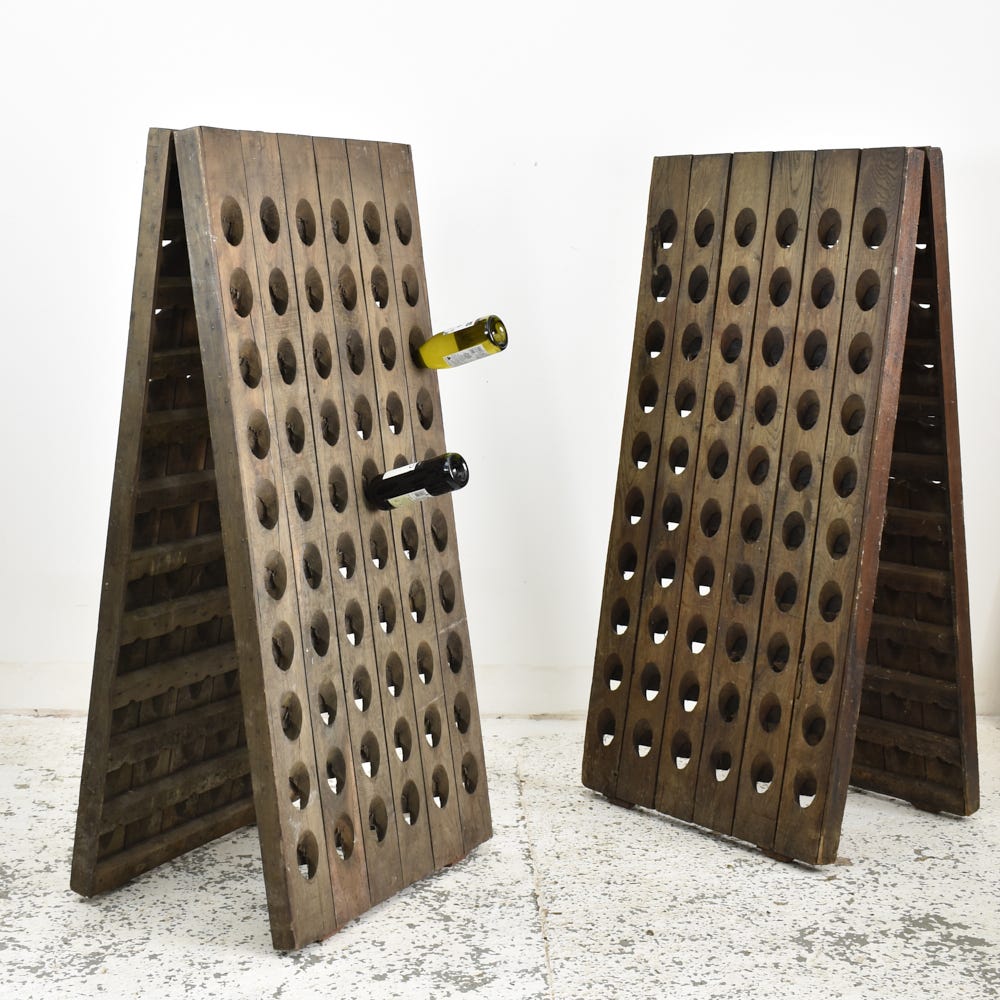
Riddling Rack. Image Credit
In the late 19th century, the absurdly French named Madame Clicquot, head of the Veuve Clicquot House invented the riddling rack or Pupitre. The pupitre is an A-frame rack with holes drilled at an angle. The bottles are placed in these holes neck first and systematically rotated and tilted over several weeks. This painstaking process, known as riddling (remuage), gradually forces the sediment to slide down the neck of the bottle, leaving the rest of the wine crystal clear.
The gyropalette is a mechanized, programmable cage that can hold hundreds of bottles. It mimics the motion of a manual remueur but performs the entire riddling process in a fraction of the time (a few days compared to several weeks). This innovation dramatically increased efficiency and consistency, allowing for large-scale production of high-quality Champagne. The gyropalette is now a standard piece of equipment in the industry, though some producers of high-end, vintage cuvées still prefer the traditional manual method.
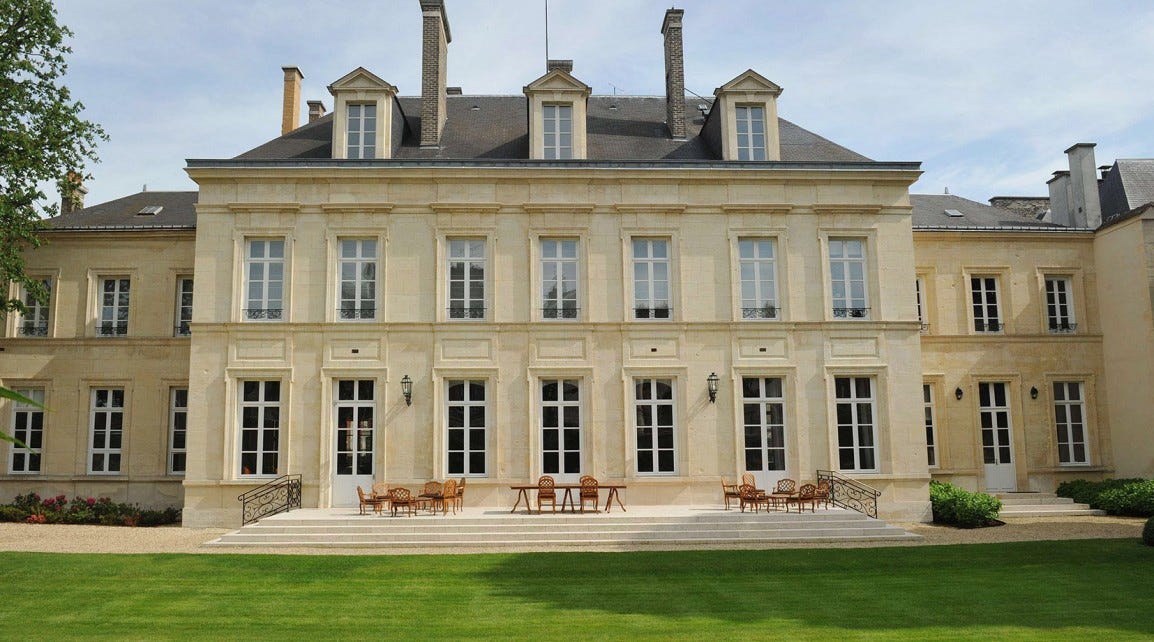
The Veuve Clicquot House. Image Credit
But getting all the sediment to the neck is only somewhat helpful. After collecting it there, you need to remove it. That’s disgorging.
Disgorgement
Once the sediment is collected through the riddling rack, it must be removed. Initially, this was done by quickly removing the cap and allowing the pressure to expel the sediment while minimizing loss of the wine (known as disgorgement on the fly).
The most efficient and modern method is called “disgorgement on ice” by which the neck of the bottle is dipped in a freezing brine solution creating an ice plug in the neck of the bottle. The ice plug contains the settled sediments and is easily removed without wasting precious wine. Today, this method involves complex freezing methods and a blast of air to remove the ice from the bottle in the most efficient way.
Following disgorgement, wine makers need to top up the bottle to make up for the wine lost. This is done through a process called “dosage” which involves adding a mixture of wine and sugar that allows the wine maker to fine tune their product. The dosage step can involve a mixture including reserve wines and can be the difference between dry “Brut” champagne and sweeter “Doux.”
I don’t recall whether the bottle I opened from behind my bar was a Brut or a Doux. It wouldn’t have mattered to the man at the bar I nearly blinded either. But to the millions of people who will enjoy champagne tomorrow night, I hope they can spare a thought for the technology that took champagne from being viewed as a flaw in traditional wine making to the symbol of celebration it is today. Few other celebratory accessories convey celebration and joy in the way champagne does. Everything from reading the word to hearing the pop is a part of our celebration. Especially on New Years.
Happy New Year from The Binary Breakaway. Be safe everyone.